Simple Nonogram review
A bare-bones picture-logic puzzle: fill cells so the row and column counts line up and an image appears. No timer, no clutter, works with mouse or touch.
Simple Nonogram
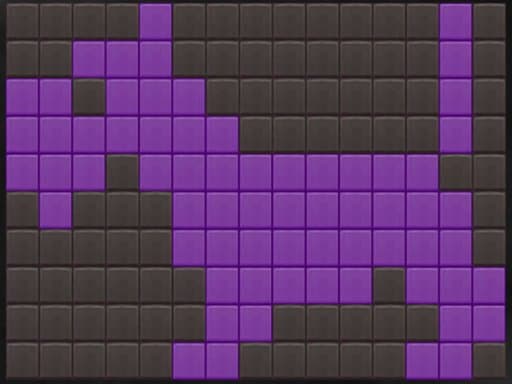
Loads the game in this frame. Nothing is installed; the game runs in your browser tab.
The game is made by its developer and served through its distributor, GameMonetize. It may show its own adverts inside the frame. Read our editorial policy for how we choose what to list.
Controls
Keyboard & mouse
- Click cells to fill or clear them
- Mouse only; no keyboard input is listed
Phone & tablet
- Tap cells to fill or clear them
- Landscape layout; hold the phone sideways
What it is
A nonogram is a grid with numbers along the top and down the left. Each number tells you how many consecutive cells in that row or column are filled, in order, with at least one empty cell between groups. Fill the right cells and a small picture appears. The puzzle type is Japanese in origin, from the late 1980s, and also goes by paint-by-numbers.
Simple Nonogram is exactly what the title says. The listing promises the grid, the clues and no time limit, and nothing else. No story, no character, no scoring is mentioned: you get a puzzle, you solve it, and presumably the next one is waiting.
How it plays
Input is mouse or touch: click or tap a cell to fill it. The canvas is 800 by 480, a wide shape, so on a phone the game wants to be held sideways, with the grid in the middle and clue numbers along the top and left. On a desktop it is a small window, which suits a puzzle where you spend most of the time reading numbers rather than clicking.
One thing I look for in any nonogram is a way to mark a cell as definitely empty, usually a cross. The listing does not mention one. If it exists, use it constantly; if not, you will be holding eliminations in your head, which is fine on a small grid and painful on a large one. Check on your first puzzle.
Tips that actually help
Nonograms are never meant to be guessed. Every well-made puzzle can be solved by pure deduction, one line at a time, and the moment you find yourself trying a cell to see what happens you have skipped a step.
- Start with the lines that are fully determined: a single clue equal to the line length, or clues whose total plus the mandatory gaps exactly fills the line.
- Use overlap on large clues. In a line of 10 with a clue of 7, the block must occupy at least cells 4 to 7 whichever end it starts from, so fill those four now.
- A filled cell at the edge of a line anchors the first block completely; count from it and fill the rest of that block.
- Alternate rows and columns. Every cell you fill in a row is new information for its column, so follow each placement into the crossing line.
- Mark empties as aggressively as you mark fills. Knowing a cell is empty is often what splits a line into solvable pieces.
- When you stall, pick the line with the fewest ways to arrange its clues and list them; there are usually only two or three, and they share cells you can fill.
The overlap trick, explained
Overlap is the technique that carries most nonograms, and it is worth spelling out once. Take a row of ten cells with a clue of 3 and 4. Pushed fully left, the blocks occupy cells 1 to 3 and 5 to 8. Pushed fully right, they occupy 3 to 5 and 7 to 10. Any cell that is filled in both placements is filled in every placement: cell 3 for the first block, and cells 7 and 8 for the second. Three cells solved without touching another line. It works on any clue whose block is longer than the slack in the line, and on a big grid you can run it down every row and column before doing any harder thinking.
Where it falls short
Simple can mean bare. The listing does not tell you the grid sizes, how many puzzles there are or whether progress is saved, and there is no stated way to mark empty cells, the one convenience a nonogram cannot do without on larger grids. The wide landscape canvas is an odd choice for a game people mostly play on a phone in one hand. It is a competent implementation of a great puzzle type with nothing added on top.
What works
- The real rules with no distractions
- No timer, so you can think properly
- Works with a mouse or a finger without fuss
What holds it back
- No stated way to mark empty cells
- Grid sizes and puzzle count are unknown from the listing
- Landscape layout is awkward one-handed
Verdict
3.0If you already like nonograms and want a plain grid to solve during a break, this does the job and stays out of your way. If you are new to the puzzle type it is a decent introduction, provided you read the overlap section above first. Anyone who wants themed puzzle packs, a progress map or a hint system should look for a fuller nonogram; this one is the puzzle and nothing more.
Questions people ask
- How do nonogram clues work?
- Each number is a run of consecutive filled cells in that row or column, listed in order, with at least one empty cell between runs. A clue of 2 4 means a block of two, a gap, then a block of four.
- Is there a time limit?
- No. The developer states that time is not limited, so stare at a grid as long as you need.
- Does it work on a phone?
- Yes, by tapping cells. The canvas is a wide 800 by 480, so hold the phone sideways; the cells are small in portrait.
- Can I mark cells I know are empty?
- The listing mentions only filling cells, not a cross or empty marker. Try it on your first grid; if there is none, keep eliminations in your head or on paper.
If you liked this, try
 Puzzle
Sudoku: Classic Minimalism
3.5A no-frills 9x9 sudoku built for a phone held upright. The rules are the standard three and nothing gets between you and the grid. Good for a quiet break.
Read the review → Puzzle
Minesweeper: Find Bombs
3.5A Godot-built minesweeper that swaps the classic board-size picker for a run of levels. Left-click opens a cell, a long press flags it. Best played at a desk.
Read the review → Puzzle
Sokoban Master
4.0A clean take on the 1982 crate-pushing classic with undo, star ratings for efficient solutions and a level editor. Best played with arrow keys.
Read the review → Puzzle
Solitaire 8 Collection
4.5Eight solitaire variants under one menu, every deal checked to be solvable, with unlimited undo, hints and a shared daily challenge. Strongest on a desktop.
Read the review →Guides that mention this game
- how-to
Playing browser games on a Chromebook: what runs well and what to skip.
Chromebooks run the same Chrome as a desktop, so HTML5 games just work. Where 3D WebGL games stutter and why, plus which reviewed games suit the hardware.
- list
Nine browser games that fit a ten-minute break.
Nine reviewed games chosen for round length, quick starts and how easily you can stop: minesweeper, 2048, solitaire, ping pong, mini golf and more.
- opinion
What makes a good puzzle difficulty curve? A game developer's view.
A mobile puzzle developer on safe first levels, the aha moment, plateaus versus spikes, timers, undo and stars, tested against sudoku, sokoban and 2048.